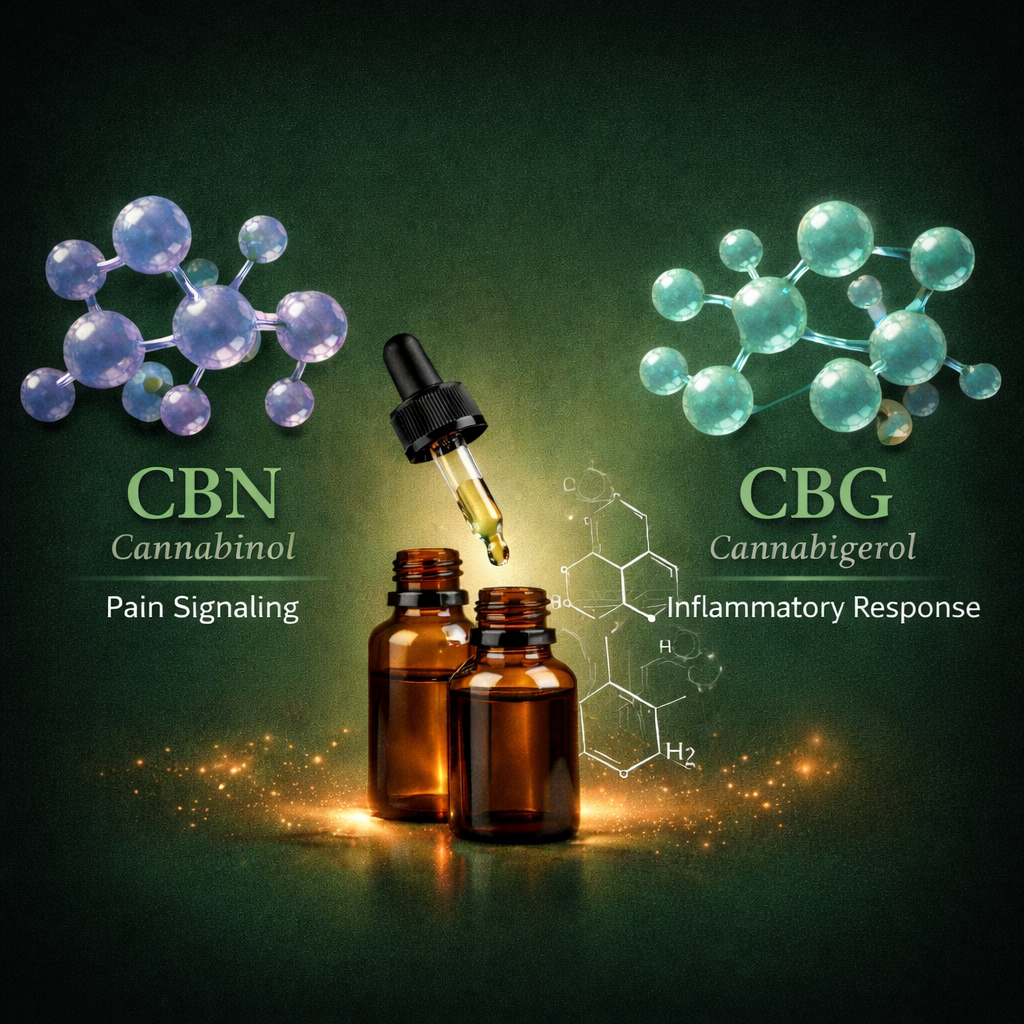
CBN and CBG
CBN and CBG are core ingredients in Recovery Rx because they target pain at the signaling level—helping calm the inflammatory “noise” that sensitizes tissue and keeps nociceptors firing—without relying on harsh synthetics or numbing agents.
How CBN + CBG work
These cannabinoids interact with the body’s endocannabinoid system and related receptor networks that regulate inflammation and pain signaling. In plain terms, they help “turn down the volume” on hypersensitive tissue by influencing multiple pathways at once:
Modulate CB2-dominant immune signaling, supporting a healthier inflammatory response in peripheral tissues. This matters because a large part of pain is not just damage—it’s immune-driven chemical signaling that keeps nerves irritated.
Influence pain-transmission receptors (TRP channels) involved in burning/aching sensations and peripheral sensitization. By modulating these “alarm system” channels, CBN/CBG can help reduce the intensity of pain signals traveling into the nervous system.
Reduce inflammatory mediator output upstream, which helps limit downstream production of cytokines and lipid mediators that perpetuate swelling, soreness, and tenderness.
Provide complementary effects:
CBG is particularly useful for inflammatory tone and peripheral sensitivity; CBN adds a deeper “calming” profile that pairs well for muscle guarding and nighttime discomfort—without making the formula feel sedating or greasy.
Evidence for pain and joint support
Research—including mechanistic and clinical models—supports cannabinoid involvement in inflammation regulation and pain signaling modulation, which is exactly the intent behind pairing CBN + CBG in a targeted topical.
Topical delivery makes clinical sense because these compounds are lipophilic (oil-friendly) and are commonly formulated into carriers designed for localized application—so the therapeutic effect is focused on the site of discomfort, not the whole-body.